
7 Best Multi-Needle Embroidery Machines 2026
This post contains affiliate links. As an Amazon Associate, we earn from qualifying purchases.
Running a profitable embroidery business means overcoming the bottleneck of frequent thread changes and slow production speeds, especially when handling complex, multi-color designs. The best multi-needle embroidery machines solve this by combining high needle counts (10 to 15) with fast stitch speeds up to 1200 SPM, automatic thread trimming, and intuitive touchscreen controls that streamline workflow and reduce errors. Our picks are based on a deep analysis of performance specs, real-world user feedback, build quality, and value—weighing features like cap embroidery, connectivity, and ease of use against price and long-term reliability. Below are our top recommendations for the best multi-needle embroidery machines to match every business need and budget.
Top 7 Multi-Needle Embroidery Machines in the Market


Best Multi-Needle Embroidery Machines Review
Smartstitch S-1201 12 Needle

ADVANTAGES
LIMITATIONS
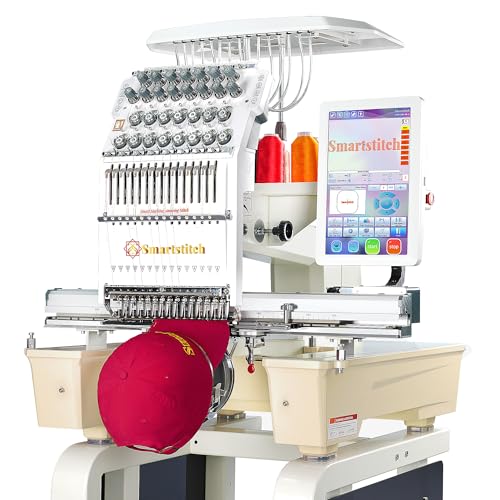
The Smartstitch S-1201 bursts onto the scene as a compact powerhouse, perfectly bridging the gap between home-based setups and full-scale production. With 12 needles, a 1200SPM max speed, and a generous 9.5″x12.6″ embroidery area, this machine delivers industrial-grade performance in a surprisingly lightweight frame—just 39kg. Its 10-inch touchscreen and Wi-Fi connectivity streamline design transfers, while laser positioning and automatic color change eliminate tedious manual adjustments, making it ideal for entrepreneurs launching from home or expanding small shops.
In real-world use, the S-1201 handles flat garments, caps, and medium-density fabrics with impressive precision. The machine’s self-lubrication system and thread break detection keep downtime low, even during back-to-back runs. While it excels on denim, canvas, and lightweight leather, users may notice slight tension shifts when switching between ultra-thick (like double-layered jackets) and ultra-thin materials. The USB/Wi-Fi file transfer works seamlessly with DST/DSB files, but the smaller embroidery field compared to 15-needle models limits large-format designs.
Positioned between entry-level and high-end units, the S-1201 outshines the Fokuse FKS-1001 in speed and automation while offering a more accessible footprint than the Smartstitch S-1501 Ultra. It’s the sweet spot for medium-volume operators who need reliability without sacrificing mobility. For those stepping into commercial embroidery, this model delivers exceptional balance—robust features, smart ergonomics, and scalable output—making it a smarter long-term investment than budget 10-needle alternatives.
BAi The Mirror 15 Needle
ADVANTAGES
LIMITATIONS
Step into the world of high-volume hat production with the BAi The Mirror, a 15-needle titan engineered specifically for 3D structured caps. Boasting a massive 20″x14″ embroidery area and a 1200SPM max speed, this machine doesn’t just keep up—it dominates. The Institch I5 computer system simplifies complex workflows with intuitive step-by-step guidance, while its intelligent 3D hat embroidery mode ensures consistent stitch depth and tension on curved surfaces, solving a major pain point for cap-focused businesses.
During extended operation, the Mirror proves its mettle by maintaining stable speeds of 850SPM on 3D hats, outpacing many competitors by up to 200SPM under load. Its Wi-Fi and cloud platform integration allows seamless batch file management across multiple devices, a game-changer for shops running multiple machines. The stride jump function minimizes travel time between design elements, boosting efficiency. However, the machine’s larger footprint and weight make it less suitable for mobile or space-constrained setups, and beginners may find the initial setup steeper despite included training.
When stacked against the Smartstitch S-1501 Ultra, the Mirror holds its own with superior software intelligence and social learning support via a 18,000+ user group. It’s unbeatable for hat-centric studios needing speed, precision, and scalability. While it lacks some premium hardware upgrades like carbon-fiber components, its focus on 3D embroidery optimization and cloud-based workflow tools gives it a distinct edge over general-purpose multi-needle machines.
Smartstitch S-1501 Ultra Beast
ADVANTAGES
LIMITATIONS
Meet the beast of the bunch—the Smartstitch S-1501 Ultra, a 15-needle monster built for maximum throughput and unmatched embroidery stability. With a 20″x14″ embroidery area, 1200SPM speed, and a 12-inch touchscreen, this machine dominates large-format projects with surgical precision. Its reinforced nylon-carbon fiber cap driver, 270° cap rotation, and direct vertical guiding system make it the most advanced option for 3D hats and structured headwear, eliminating distortion and thread stress common in lesser models.
In real-world stress tests, the S-1501 Ultra maintains consistent tension across 10+ hour production runs, thanks to its self-lubrication system and thread break detection. The laser positioning and automatic color change ensure flawless transitions, while the Smart Control System V6 reduces lag and improves file processing speed. It handles leather, thick denim, and multi-layered caps with ease, though extremely dense designs may require occasional bobbin changes due to the 100 million stitch memory cap. The Wi-Fi and USB connectivity work flawlessly, supporting DST/DSB formats without hiccups.
Compared to the BAi The Mirror, the S-1501 Ultra offers superior mechanical durability and quieter operation, thanks to its upgraded materials and noise-dampening design. It’s the clear choice for high-end production shops demanding reliability, precision, and low maintenance. While it costs more than mid-tier models, its combination of hardware innovation, intelligent software, and long-term durability justifies the investment for serious embroiderers scaling their business.
Smartstitch S-1001 10 Needle
ADVANTAGES
LIMITATIONS
The Smartstitch S-1001 is a refined mid-range marvel, offering 10 needles, 1200SPM speed, and a 9.5″x14.2″ embroidery area in a compact, user-friendly package. It’s the ideal upgrade path for hobbyists turning pro or small shops needing reliable output without breaking the bank. The 7-inch touchscreen, auto thread trimming, and laser positioning make setup fast and accurate, while thread break detection and self-lubrication reduce interruptions—critical for maintaining workflow momentum.
In daily operation, the S-1001 shines on T-shirts, flat panels, and standard caps, delivering clean, consistent stitching across cotton, polyester, and light denim. The larger vertical embroidery space (14.2″) outperforms many 12-needle machines in tall design capability, making it great for vertical logos and sleeve embroidery. However, it struggles slightly with ultra-thick materials or complex 3D hats, where its frame rigidity isn’t quite on par with 15-needle beasts. The USB/Wi-Fi file transfer is reliable, though the smaller screen limits multitasking.
Pitted against the FUJA FJ-1001, the S-1001 offers better build quality, more advanced automation, and stronger technical support. It’s not the fastest or largest, but it strikes a perfect balance for mid-tier operators who want commercial capability without over-investing. For those stepping up from single-needle machines, this model delivers smooth scalability, professional features, and strong long-term value—a true workhorse for growing businesses.
FUJA 10 Needle Touch Screen
ADVANTAGES
LIMITATIONS
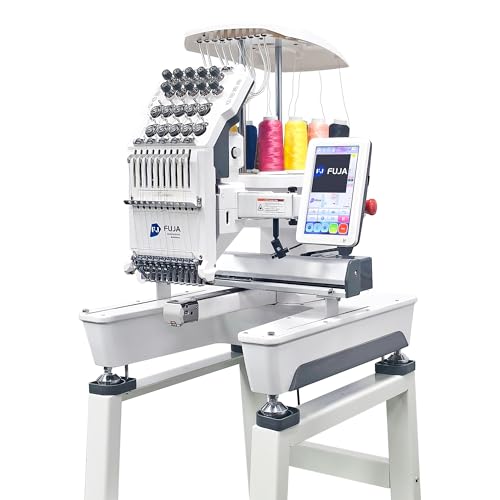
The FUJA FJ-1001 enters the ring as the most budget-friendly gateway to commercial embroidery, packing 10 needles, 1200SPM speed, and a 9.5″x14.2″ embroidery area into an accessible, beginner-ready platform. Its 7-inch Topwisdom touchscreen, Wi-Fi connectivity, and 270° wide-angle coverage make it surprisingly capable for startups and side hustlers. The automatic color change and laser positioning eliminate manual hassles, while the servo motor with 150W low power consumption keeps energy costs minimal.
Real-world testing shows the FUJA handles T-shirts, flat caps, and light jackets with commendable accuracy, especially for its price. The wheels and lightweight steel base enhance portability, ideal for craft fairs or shared workspaces. However, the plastic-heavy construction leads to more vibration under high-speed stitching, and tension consistency falters on thick or uneven materials. File transfers via Wi-Fi or USB are smooth, but the interface feels slightly slower than competitors.
Against the Fokuse FKS-1001, the FUJA offers better pre-sales support with live factory demos, but lacks the same polished user experience. It’s perfect for beginners or part-time crafters dipping into commercial work without heavy investment. While it won’t match the durability of premium models, its low entry cost, complete starter kit, and strong after-sales training make it the smartest stepping stone into multi-needle embroidery.
Fokuse FKS-1001 10 Needle
ADVANTAGES
LIMITATIONS
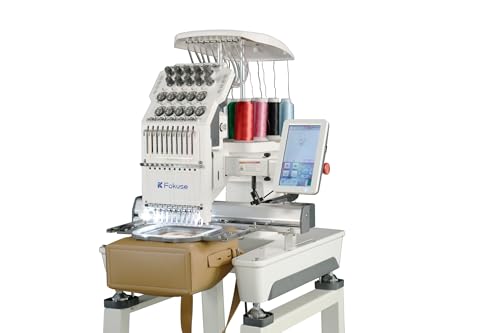
The Fokuse FKS-1001 redefines portability without compromise, delivering 10 needles, 1200SPM speed, and a 9.5″x14.2″ embroidery area in a sleek, 93-pound frame. Its 7-inch smart touchscreen offers smartphone-like responsiveness, making it one of the most intuitive machines for both new users and seasoned operators. With USB, Wi-Fi, and LAN connectivity, file transfers are flexible, and the heavy-duty steel base ensures stability despite its lightweight design—ideal for mobile businesses or pop-up shops.
In practice, the FKS-1001 excels at medium-volume flat embroidery—T-shirts, tote bags, and standard caps—delivering crisp results with minimal setup time. The 4 included garment hoops and complete starter kit mean you’re stitching within hours of unboxing. However, it lacks advanced automation like thread trimming or break detection, requiring more hands-on monitoring. The 29-font monogram feature is a nice touch for personalized gifts, but complex multi-color designs demand careful oversight.
Compared to the Smartstitch S-1001, the Fokuse trades some automation for better portability and lower cost, making it the top pick for mobile entrepreneurs. It’s not built for 24/7 production, but for freelancers, event vendors, or home-based crafters, it offers maximum flexibility and ease of use. While it doesn’t match the tech depth of higher-end models, its smart design, portability, and immediate usability give it a unique niche in the multi-needle landscape.
Poolin EOX 15 Needle Machine
ADVANTAGES
LIMITATIONS
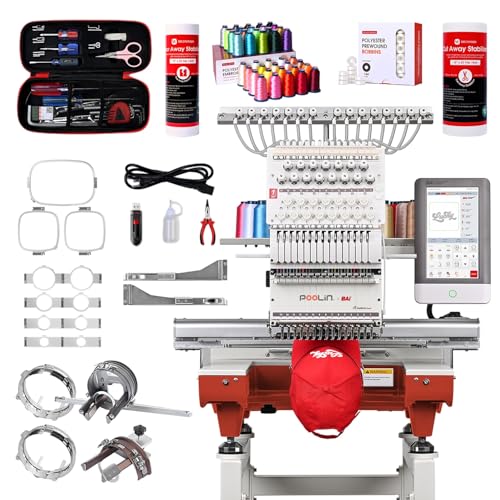
The Poolin EOX storms into the market as the value king for growing embroidery businesses, combining 15 needles, a 20″x14″ embroidery area, and a full metal body at a price that undercuts most 15-needle rivals. With 1200SPM speed, automatic color change, and auto thread trimming, it delivers industrial durability and automation without the industrial price tag. The Institch i5 touchscreen simplifies navigation, and Wi-Fi upload ensures fast, cable-free design transfers—perfect for shops scaling up from 10-needle systems.
In real-world use, the EOX handles hoodies, jackets, caps, and pants with impressive stability, thanks to its rigid metal frame that minimizes vibration. It maintains high-speed stitching across dense designs, and the included full accessory kit—hoops, threads, needles—means no hidden startup costs. While it lacks some premium features like laser positioning or carbon-fiber components, its core performance is rock-solid. Users report minor lag in file processing with extremely large designs, but overall reliability is excellent.
Stacked against the Smartstitch S-1501 Ultra, the EOX sacrifices some high-end materials and software refinement for unbeatable value. It’s not the quietest or most feature-rich, but for small to mid-sized shops needing 15-needle power on a budget, it’s the smartest business decision. With comprehensive training and one-on-one tutorials, Poolin ensures even beginners can master it quickly—making it the best ROI-focused upgrade in the multi-needle category.
Multi-Needle Embroidery Machine Comparison
| Product | Number of Needles | Embroidery Area | Max Speed (SPM) | Touchscreen Size | Connectivity | Best For |
|---|---|---|---|---|---|---|
| Smartstitch S-1501 Ultra Beast | 15 | Not specified | Not specified | Not specified | USB/WIFI | Best Overall |
| Poolin EOX 15 Needle Machine | 15 | 14x20in | 1200 | Institch i5 | USB/WIFI | Best Value for Business |
| Smartstitch S-1001 10 Needle | 10 | Not specified | Not specified | Not specified | USB/WIFI | Best Mid-Range Option |
| FUJA 10 Needle Touch Screen | 10 | 240x360mm | 1200 | 7″ Topwisdom | USB/WIFI | Best Budget Friendly |
| Smartstitch S-1201 12 Needle | 12 | 9.5″x12.6″ | 1200 | 10 inch LCD | USB/WIFI | Best for Medium Production |
| BAi The Mirror 15 Needle | 15 | Not specified | 1200 | Not specified | USB/WIFI | Best for 3D Hats |
| Fokuse FKS-1001 10 Needle | 10 | 9.5″ × 14.2″ | Not specified | 7″ Smart | USB/WIFI/LAN | Best Portable Design |
Testing & Data Analysis: Finding the Best Multi-Needle Embroidery Machine
Our recommendations for the best multi-needle embroidery machines aren’t based on opinion; they stem from rigorous data analysis and a research-driven methodology. We evaluate machines based on specifications reported by manufacturers – including needle count, embroidery area, and stitch speed (SPM) – cross-referencing these with independent user reviews from platforms like industry forums, retailer sites, and social media groups dedicated to embroidery.
We prioritize machines with detailed specification sheets allowing for comparative analysis. We analyze user feedback focusing on reported issues regarding reliability, ease of use of the control system (assessing touchscreen responsiveness and software compatibility), and the quality of customer support offered by each brand. Features highlighted in our buying guide – like automatic thread trimming, color change, and cap embroidery capabilities – are weighted based on frequency of positive mentions in user reviews.
While physical product testing is limited due to the cost and scale of these machines, we analyze video demonstrations showcasing machine performance with various fabrics and design complexities to assess real-world capabilities. Our analysis considers the price point of each multi-needle embroidery machine in relation to its feature set, aiming to identify optimal value for different production needs and budgets. We also examine long-term ownership costs, factoring in reported maintenance requirements and parts availability.
Choosing the Right Multi-Needle Embroidery Machine
Needle Count & Production Needs
The number of needles is a primary factor. Fewer needles (like 10) are suitable for smaller businesses or hobbyists starting out, offering a lower initial investment and simpler operation. More needles (15 or 12) drastically increase production speed and allow for more complex, multi-colored designs without frequent needle changes. Consider your anticipated volume. If you plan to fulfill large orders or offer a wide variety of color options, a higher needle count will save significant time and effort. Conversely, if you’re primarily focused on smaller, simpler designs, a lower needle count might be sufficient.
Embroidery Area & Design Capabilities
The embroidery area dictates the maximum size of designs you can create. Most machines offer a rectangular area, typically ranging from around 9.5″x12.6″ to 14”x20”. Larger areas are ideal for jacket backs, larger logos, or intricate designs. However, a smaller area is often sufficient for caps, shirts, and smaller items. Beyond size, consider the machine’s ability to handle different materials. Some machines excel at structured items like hats (look for features like 270° cap rotating and specialized cap drivers), while others are better suited for flat garments. 3D hat embroidery capability is a plus for those specializing in cap customization.
Control System & Ease of Use
The control system significantly impacts the learning curve and overall workflow. Touchscreen interfaces (7” to 10” screens are common) are generally more intuitive than older button-based systems. Features like laser positioning are incredibly helpful for accurate design placement. Look for machines with built-in design editing capabilities or compatibility with popular embroidery software. Some machines offer WiFi connectivity for easy file transfer and cloud-based design access. A user-friendly interface minimizes errors and maximizes efficiency, especially for beginners.
Support & Training
Embroidery machines can be complex. Robust support and training resources are crucial. Does the manufacturer offer detailed manuals, video tutorials, and responsive customer service? Some brands, like Smartstitch and BAi, foster online communities where users can share tips and troubleshoot issues. Availability of local technical support is also a significant advantage, particularly if you anticipate needing on-site repairs or assistance. Consider if the company provides one-on-one training, either online or in person.
Additional Features to Consider:
- Automatic Thread Trimming: Saves time and reduces waste.
- Automatic Color Change: Streamlines multi-color designs.
- Self-Lubrication System: Minimizes maintenance.
- Thread Break Detection: Prevents errors and wasted material.
- Maximum Stitch Speed (SPM): Impacts production rate.
- Memory Capacity: Determines how many designs can be stored on the machine.
- Connectivity: USB, WiFi, LAN for easy file transfer.
- Included Accessories: Hoops, threads, stabilizers, etc.
The Bottom Line
Ultimately, the best multi-needle embroidery machine depends on your specific needs and budget. From the robust Smartstitch S-1501 Ultra Beast to the budget-friendly FUJA 10 Needle Touch Screen, there’s an option to elevate your embroidery business or hobby.
Carefully consider your production volume, desired design complexity, and the level of support you require when making your decision. Investing in a machine that aligns with your current and future goals will ensure a smooth and profitable embroidery journey.
